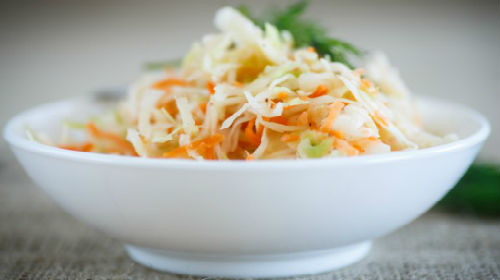
Fermented Cabbage: Pro Tips
Delicious, affordable, beneficial, and science-based.
So, what is fermented cabbage?
First of all, it is important to distinguish fermented vegetables from pickled ones. Pickled vegetables are preserved by adding acids (usually vinegar); no fermentation occurs, so they do not develop the same beneficial properties and cannot be considered truly health-promoting.
Fermented vegetables, in contrast, are produced through the activity of lactic acid bacteria, which naturally convert sugars into lactic acid and create a stable, acidic environment.
Good fermented cabbage should be crunchy, moderately salted, and neither dry nor slimy. It has a characteristic pleasant aroma and should be completely free of any unpleasant odors.
And if you already feel motivated enough to prepare fermented cabbage at home – when is the right time to do it?
The short answer: anytime you have cabbage.
Traditionally, fermented cabbage was prepared in autumn and stored in large barrels – simply because this was the most convenient time and method. However, it can be prepared at any time of the year, and the season does not significantly affect its taste or quality.
What should you start with, and how do you choose the right cabbage?
Choosing the right cabbage is essential. White cabbage is the best option, as it contains relatively high levels of natural sugars. This is an important factor for lactic acid bacteria, which rely on sugars as their primary energy source.
Technically, lactic acid bacteria are a saccharolytic group of microorganisms that convert sugars into organic acids during fermentation.
First, carefully inspect the cabbage and decisively reject any heads showing even the slightest damage, as this may indicate mould or other contamination.
Next, prepare clean equipment – a fermentation vessel or jar, a shredder or knife, and bowls. All utensils should be thoroughly washed and completely dried before starting.
And, of course, wash your hands thoroughly or use fresh, clean gloves. These details are very important because the product does not undergo heat treatment, and the introduction of unwanted microbiota can spoil the fermentation process.
Shred the cabbage finely into thin strips and add salt (2–2.5%, or 20–25 g of salt per kilogram of cabbage). Salt is important not only for flavour – it also inhibits the growth of unwanted microorganisms while allowing lactic acid bacteria to thrive.
If you like, you can add carrots for extra flavour and colour.
Mix everything well and knead with clean hands until the cabbage releases its juice. This creates a comfortable environment for the beneficial microorganisms to multiply.
Place the prepared mixture tightly into the fermentation container. Avoid using a container that is too wide, as a smaller surface area exposed to air helps prevent spoilage. Place something heavy on top to keep the cabbage submerged – if using a glass jar, a smaller glass filled with water works well.
Be careful: a glass jar can crack under too much pressure, so press the cabbage gently.
Important: the cabbage should be fully submerged in its juice. This prevents oxygen from entering and creates the ideal environment for lactic acid bacteria to do their job.
Place the containers in a warm spot (but not above 32°C; near a radiator works fine) for 2–3 days, and your fermented cabbage will be ready. The fermentation will also occur at lower temperatures, but it may take a bit longer.
Do not stir the cabbage during the process, as this can introduce unwanted oxygen. However, you can gently pierce it with a long knife to release carbon dioxide that naturally accumulates during fermentation.
How long can you keep your fermented cabbage, and how? Keep your fermented cabbage somewhere cool – below 10°C – but don’t let it freeze.
The great thing about fermented cabbage is that it lasts a long time! Stored in the fridge or any cool spot, it can stay fresh for up to six months. Why so long? During fermentation, lactic acid bacteria multiply and produce lactic acid and hydrogen peroxide, which naturally preserve the cabbage and keep harmful microbes like E. coli, Staphylococcus, mould, and many others under control.
How is fermented cabbage beneficial?
First, it is a raw vegetable, packed with vitamins and fiber. Second, it is a source of lactic acid bacteria, which support a healthy gut. Third, these same bacteria, while consuming plant substrates, produce B vitamins and folic acid. Fourth, bacterial enzymes break down large, complex plant polysaccharides into smaller, absorbable fragments, many of which have antioxidant properties. Lactic acid bacteria can even reduce nitrates in cabbage if their levels are too high.
Can fermented cabbage be harmful sometimes?
Yes – but only in certain cases. If it’s spoiled, it can upset your stomach. Also, remember that fermented cabbage contains a fair amount of salt, especially if you’re following a low-sodium diet like DASH. Don’t worry too much, though – it still has less salt than sausages.
Very rarely, some lactic acid bacteria can produce substances called biogenic amines. In high amounts, these might cause headaches or nausea.
The takeaway? Enjoy your fermented cabbage, but don’t eat it all the time as your only food - even if it’s super tasty! Balance is key